
From Ports to Power Plants: Decision Intel Transforms Critical Infrastructure
Oct 19, 2026
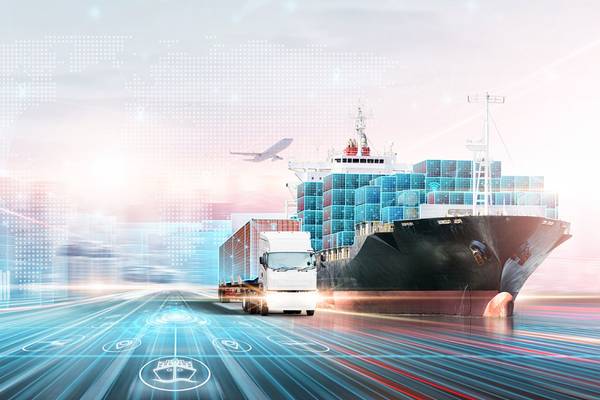
© enanuchit/AdobeStock
Critical infrastructure has never been more connected. Across ports, energy networks and industrial facilities, operators have access to unprecedented volumes of operational data generated by sensors, surveillance systems, satellite imagery, connected equipment and digital monitoring platforms. Every day, these technologies provide valuable insights into the performance, condition and security of critical assets. Yet despite this growing visibility, one challenge continues to persist.
The problem is no longer collecting operational data. It is understanding what matters quickly enough to anticipate emerging risks, minimize disruption and make informed operational decisions.
For years, investment in critical infrastructure has focused on expanding monitoring capabilities. More sensors, more connected devices and more operational systems have improved visibility across increasingly complex environments. While these technologies remain essential, they have also introduced a new challenge. Operators are often required to interpret fragmented information spread across multiple systems while responding to rapidly evolving operational conditions.
In this environment, visibility alone is no longer enough.
Whether managing a busy port, overseeing an energy network or monitoring geographically dispersed infrastructure, operators must bring together information from numerous sources before they can assess a situation and determine the appropriate course of action. Without that context, seemingly isolated operational signals can quickly develop into costly disruptions affecting supply chains, energy delivery and essential services.
This challenge is remarkably consistent across critical infrastructure sectors.
A modern port may simultaneously monitor vessel movements, cargo operations, weather conditions, perimeter security and logistics activity. Likewise, energy operators oversee extensive networks of pipelines, substations, generation assets and transmission infrastructure while monitoring environmental conditions, equipment performance and operational risks.
Although these environments appear very different, they share a common operational reality: multiple systems generating vast amounts of information that must be interpreted together rather than in isolation, the conversation is therefore beginning to shift.
Rather than asking how organizations can collect more information, infrastructure operators are increasingly asking how they can transform existing information into better operational decisions and, more importantly, identify risks before they escalate into operational incidents. This is where decision intelligence is emerging as a critical capability.
Unlike traditional monitoring platforms, decision intelligence is designed to connect information across multiple operational domains rather than presenting individual data streams independently. By combining information from satellite imagery, geospatial intelligence, operational sensors, maritime systems, infrastructure monitoring and other data sources, it helps organizations develop a more complete understanding of complex operational environments.
The objective is not simply greater visibility. It is greater understanding that enables organizations to recognize emerging risks earlier, respond proactively and strengthen operational resilience before disruption occurs.
Artificial intelligence plays an important role in enabling this transition. Rather than replacing existing operational systems, AI acts as the intelligence layer that identifies relationships between multiple data sources, highlights emerging risks and provides operators with the context needed to prioritize decisions. By recognizing early indicators of operational change, organizations can move beyond reacting to incidents and instead anticipate them.
For ports, this could mean combining vessel movements, weather data, satellite imagery and operational activity to improve maritime awareness, anticipate congestion or operational bottlenecks and minimize disruption across port operations.
For energy operators, it could involve correlating infrastructure performance, environmental conditions, geospatial information and operational data to identify early indicators of equipment failure or operational risk before they affect service continuity. In both cases, the challenge is fundamentally the same. Operational decisions depend not on the quantity of information available, but on the ability to interpret it within the right context.
This principle underpins TACTICAAI ’s approach to decision intelligence. By combining Earth Observation, geospatial intelligence, operational data, multi-sensor fusion and AI-powered reasoning, the platform is designed to provide operators with a common operational picture that supports faster, more informed decision-making. Rather than functioning as another monitoring platform, it enables organizations to connect fragmented information, understand developing situations and coordinate action across complex operational environments while helping anticipate and mitigate operational risks.
Importantly, this approach does not replace human expertise.
Operators remain central to every operational decision. AI supports that expertise by reducing cognitive workload, identifying relationships that may otherwise go unnoticed and presenting information in a way that enables faster interpretation. Human judgement continues to determine priorities, assess risk and make final decisions.
As critical infrastructure continues to become more interconnected, the organizations that perform most effectively will not necessarily be those with access to the largest number of sensors or the greatest volume of operational data.
Their advantage will come from recognizing emerging risks sooner, responding before disruption occurs and building more resilient infrastructure capable of adapting to increasingly complex operational environments.
The future of critical infrastructure will not be defined by the volume of operational data organizations collect, but by how effectively they transform that data into decision intelligence, connecting information across domains, providing context for human operators and enabling organizations to anticipate risk, strengthen resilience and make better decisions. About the Author: Dr. Chaouki Kasmi is Chief Innovation Officer at the Technology Innovation Institute (TII).
Technology
Ports
infrastructure
Digitalization