
As Interferry turns 50, the Ferry Industry Navigates Change, Again
Sept 30, 2026
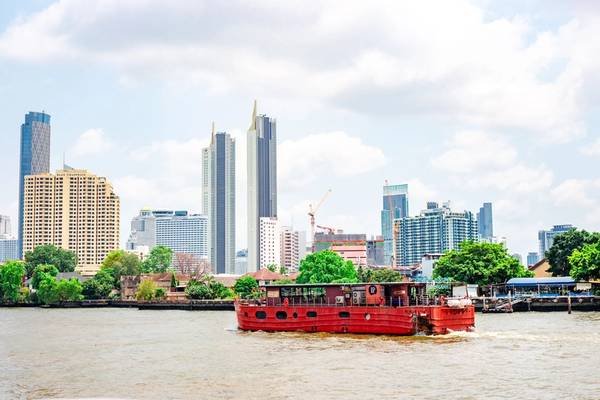
Copyright Natalia/AdobeStock
When Interferry convenes its annual conference in Bangkok, Thailand, the international ferry association will mark a milestone: its 50th anniversary. But while there will be plenty of time to celebrate five decades, CEO Mike Corrigan sees the meeting as an opportunity to tackle some of the biggest technical, regulatory and operational challenges confronting ferry operators today.
Interferry has grown from a small group that gathered periodically to discuss ferry operations into an organization with approximately 300 members in 40 countries and regular interaction with roughly 3,000 industry professionals. The scale of the industry itself is equally impressive. Corrigan said ferries carry about 4.3 billion passengers and 373 million vehicles annually.
“The passenger numbers are about the same as airlines, but the complexity with the vehicles is always the challenge,” Corrigan said.
50 Years, Bangkok Style
Bangkok will put that global reach on display. Corrigan said demand to attend the anniversary conference has been strong, with a five-day event built around a two-day speaker program.
The anniversary will open with a retrospective examining Interferry’s evolution over 50 years. Celebrations will include fireworks over Bangkok’s Chao Phraya River and a gala at the Royal Navy Hall.
“We’re going to start off with a bang with an opening ceremony that’s going to go through the 50 years and celebrate the wins and what we’ve accomplished,” Corrigan said.
The business program, however, is firmly focused on what comes next.
Corrigan points to Interferry’s ferry leader panels as perennial conference highlights. This year, senior executives will tackle three broad subjects: people, lifeline and commuter services, and leadership.
“The most important asset we have is not the steel and the infrastructure on the vessels or the terminals,” Corrigan said. “It’s the people that run the vessels and how do we keep them trained and engaged?”
That discussion extends to ferries’ role as essential infrastructure. Rising costs and geopolitical uncertainty are putting pressure on operators that connect islands and remote communities where ferry service is not optional.
Electrification: The Vessel is Only Half the Equation
Technology, particularly electrification, will figure prominently in Bangkok. Ferry routes, with their defined operating patterns and frequent terminal calls, can be well suited to battery-electric and hybrid propulsion.
“Our sector of shipping, more than any other, can decarbonize by using batteries and electrification,” Corrigan said. “The challenge we have is getting the electricity to the terminals, to the quays and to the ports.”
Conference sessions will examine vessels already operating or preparing to operate with electric propulsion. Another session will take the more unusual approach of asking operators to discuss what went wrong.
“There’s lessons learned along the journey and there’s bruises and bumps,” Corrigan said. “That’s what people want to hear.”
The infrastructure question also runs directly into Interferry’s legislative work.
Corrigan said European ferry operators are paying roughly €1 billion annually in carbon-related taxes, and Interferry is pushing to “ring fence” a portion of those revenues for reinvestment in port and terminal infrastructure, particularly the shore power needed to support electrification.
“We’re not actually asking for it to specifically come back to operators,” Corrigan said. “We’re asking for it to come back to ports and terminals where they can actually invest in the infrastructure.”
At the international level, uncertainty surrounding the IMO Net-Zero Framework adds another layer. Interferry maintains a regulatory presence focused on both the IMO in London and the European Union in Brussels, increasingly important as European greenhouse-gas regulations influence the wider international regulatory debate.
The organization also relies on committees representing both major operators and smaller ferry companies to shape its positions.
That regulatory advocacy perhaps best illustrates how far Interferry has traveled in 50 years. Bangkok will celebrate the history, but the agenda reflects an industry facing fundamental questions about energy, infrastructure, people and regulation.
For Corrigan, bringing the global ferry community together remains central to finding the answers.
Watch the full interview with Mike Corrigan on Maritime Reporter TV:
Ferries
Conference