
Singapore Marine Fuel Sales Up 17%
Feb 16, 2026
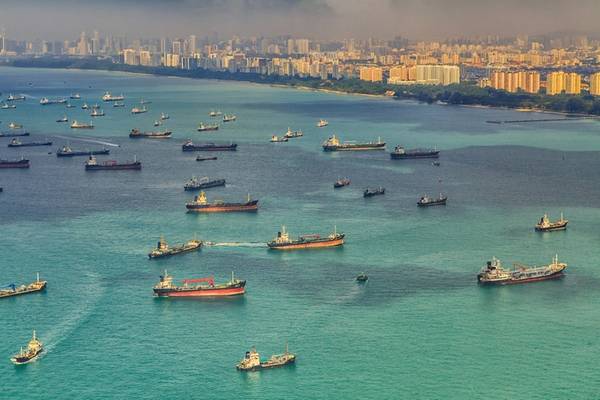
Copyright anekoho/AdobeStock
Marine fuel sales at the world's largest bunker hub of Singapore posted a strong start to 2026, driven by healthy demand and higher price premiums, based on port data and trade sources.
January 2026 volumes totalled 5.23 million metric tons, up 16.5% year-on-year (YoY), though easing from the record monthly highs of 5.51 million tons in December, data from the Maritime and Port Authority of Singapore (MPA) showed.
Container throughput at Singapore dipped 0.7% from the prior month to 3.89 million twenty-foot equivalent units (TEUs) in January, while vessel calls for bunkering held firm, climbing 1.5% to 3,778 calls, per MPA data.
Bunker market sources in Singapore said that spot demand was largely healthy in January this year, which is also typically a strong month for seasonal demand ahead of Lunar New Year.
Volumes for 0.5% low-sulphur fuel oil (VLSFO) totalled 2.56 million tons in January, down 9.5% from December but higher year-on-year, while high-sulphur marine fuel volumes were up 2.0% from December at 2.16 million tons.
Barging schedules were overall tighter, which in turn propped up price premiums that have been stagnant for many months, some traders said.
Singapore delivered-basis bunker premiums for prompt deliveries rose to above $20 a metric ton to cargo quotes by end-January, compared with low $10s in early-January, according to market sources.
Meanwhile, marine gasoil sales dipped slightly month-on-month, down 2.3% at 404,100 tons.
Sales of alternative fuels retreated, with marine biofuel volumes sliding 33.9% to 60,200 tons in January, while liquefied natural gas bunker sales fell 22.0% to 42,600 tons.
Some industry observers have warned that the delay in a formal net-zero framework for shipping could dampen uptake of low-carbon marine fuels, though shipping companies and suppliers have said they will stay the course for green investments.
(Reuters)
Ports
infrastructure
Green Ports
Bunker Fuel