
Ukraine Explores Alternative Grain Routes
Aug 4, 2026
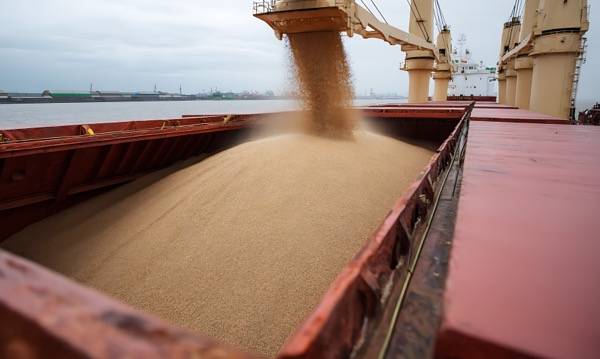
Credit: Adobe Stock/A2Z AI
Alternative grain export routes from Ukraine will reach required capacity at the end of August at the earliest, its agriculture minister said, warning they would cover only half of volumes handled by Black Sea ports disrupted by Russian attacks.
Russia has intensified missile and drone attacks on foreign-flagged civilian vessels in the southern Odesa port hub, which handles most of Ukraine's grain shipments.
The situation endangers exports of around half of this year's grain and oilseeds forecast total, Taras Vysotskyi told Reuters.
"A significant amount of production — specifically, just over 30 million tons — will not be exported to international markets unless this issue is resolved," he said.
In July, Ukraine recorded 35 attacks on vessels in ports and 22 on those at sea, as well as 67 strikes at port facilities, according to the country's infrastructure ministry. That compares with 14 attacks on vessels in all of 2025.
As a result, shipowners have suspended calls at the ports around Odesa and no vessels entered for almost two weeks as Ukraine's summer harvest season enters full swing.
Moscow says it hits military-related targets. Russia, the world's largest wheat exporter, has also reported attacks on its agricultural export facilities and commercial vessels in the Black Sea in recent weeks.
Ukrainian producers are already seeing the impact as prices for oilseeds and grains have declined by 30% on average, according to Vysotskyi.
"The situation is exceptionally complicated. In certain aspects, it is even more difficult than in March–April 2022," he said, referring to the early months of Russia's full-scale invasion.
Direct losses for Ukraine's agricultural sector could reach between $1.5 billion and $3 billion this year, the minister said. The figure has not been previously reported.
On Tuesday, Ukraine's government approved adjusting minimum export prices, in its first emergency step to support farmers.
NO LONG-TERM ALTERNATIVE
For Ukraine, shipments via the Danube River, rail and road freight are the main alternative routes, Vysotskyi said, with rail the primary option.
The routes have been tested in the past as Russia tried to block trade throughout the war. Now, the drought-hit Danube, where water levels are at historic lows, will not play a major role until October, he said.
While the authorities have launched necessary procedures and producers can already use the routes, it would take at least till the end of the summer to get them to "a more or less stable operational level," Vysotskyi said.
Even then, however, they could handle only 50% to 55% of Black Sea ports' monthly capacity of about 6 million tons, so could serve as a temporary measure, rather than a long-term alternative to sea shipments, the minister said.
The alternative routes would also add an extra cost of $45 to $50 per ton at current prices for the producers.
"There is no alternative to the ports of Odesa if Ukraine is to continue to act as a guarantor of food security," Vysotskyi said.
FOOD PRICES
Ukraine in recent seasons has accounted for about 6% of global wheat exports and about 11% of global corn exports and is also a major exporter of oilseeds and vegetable oils.
The country exported 34.4 million tons of grain during the 2025/26 season and officials have estimated at 43 million tons the surplus that could be exported in the current season.
With Russia effectively shutting down traffic at ports again, food prices could spike, affecting consumers around the world, Vysotskyi said.
"Food will become more expensive, and for the poorest people, it may become simply unaffordable," he said.
Vysotskyi called on allies to help ensure security in the Black Sea, as only a strong Ukrainian military in the area can make exports function while Russian strikes continue.
Even if ship calls were to resume tomorrow, Vysotskyi said, it would take at least a month to return to export levels seen before.
(Reuters)
Black Sea
Wheat
agricultural export